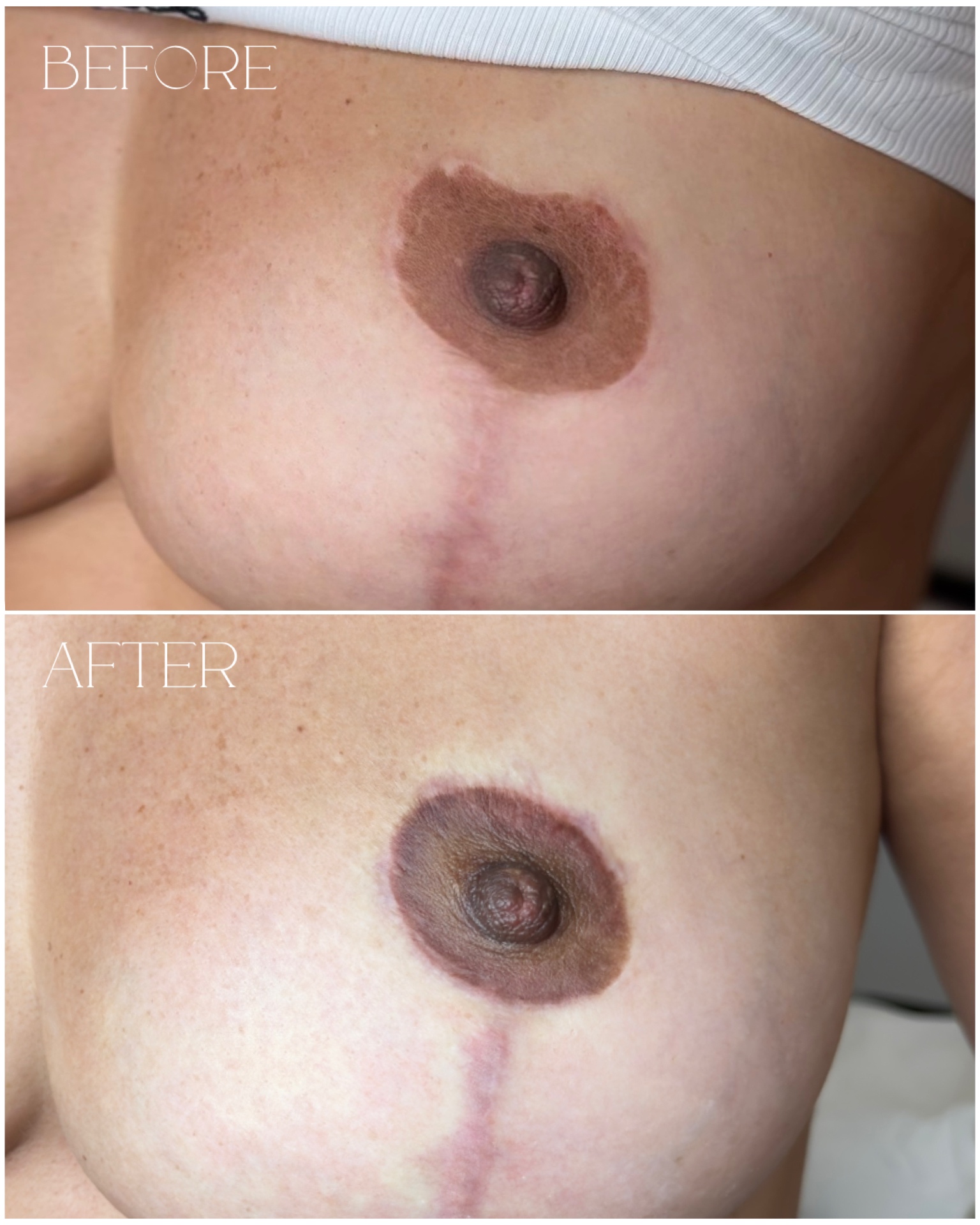
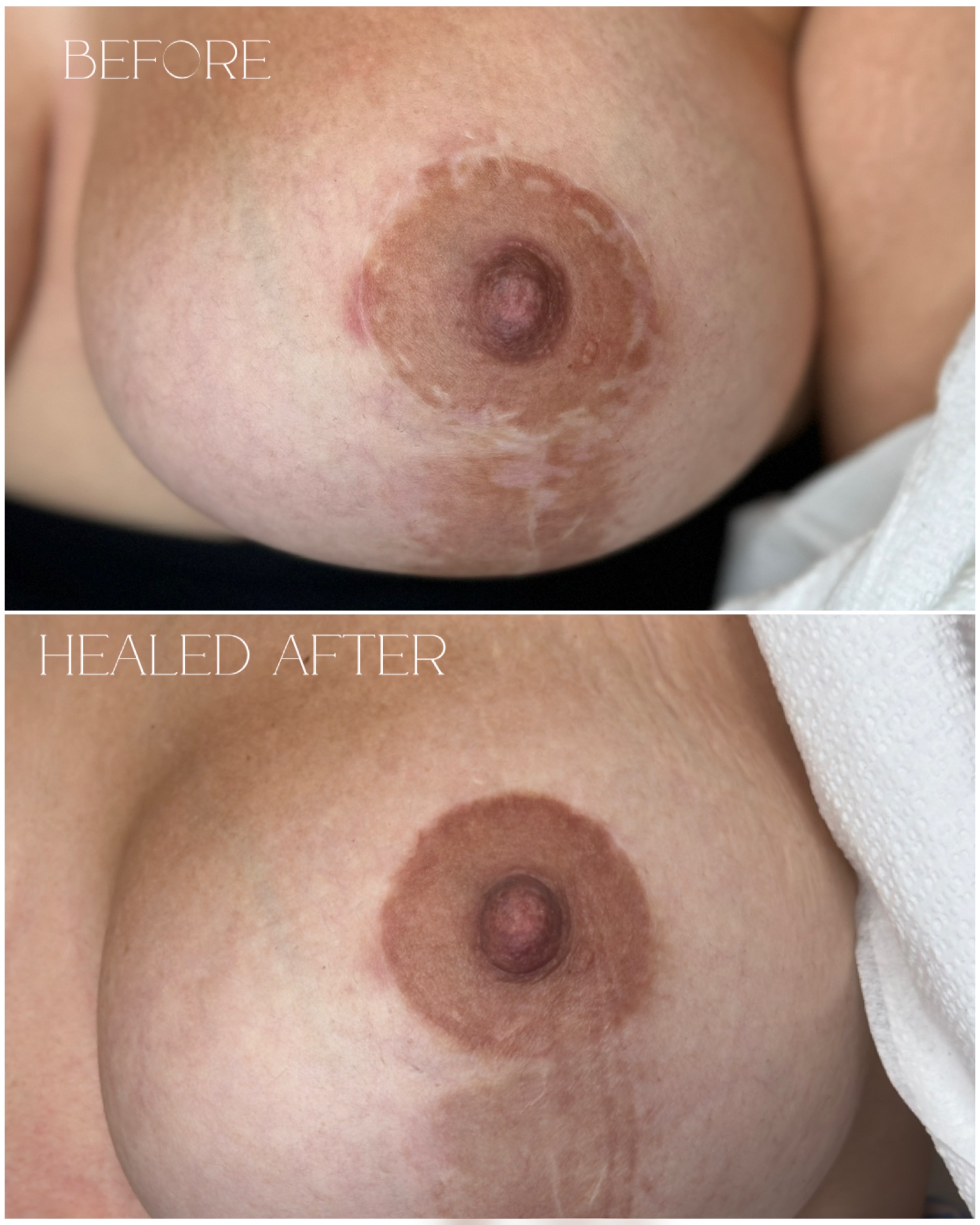
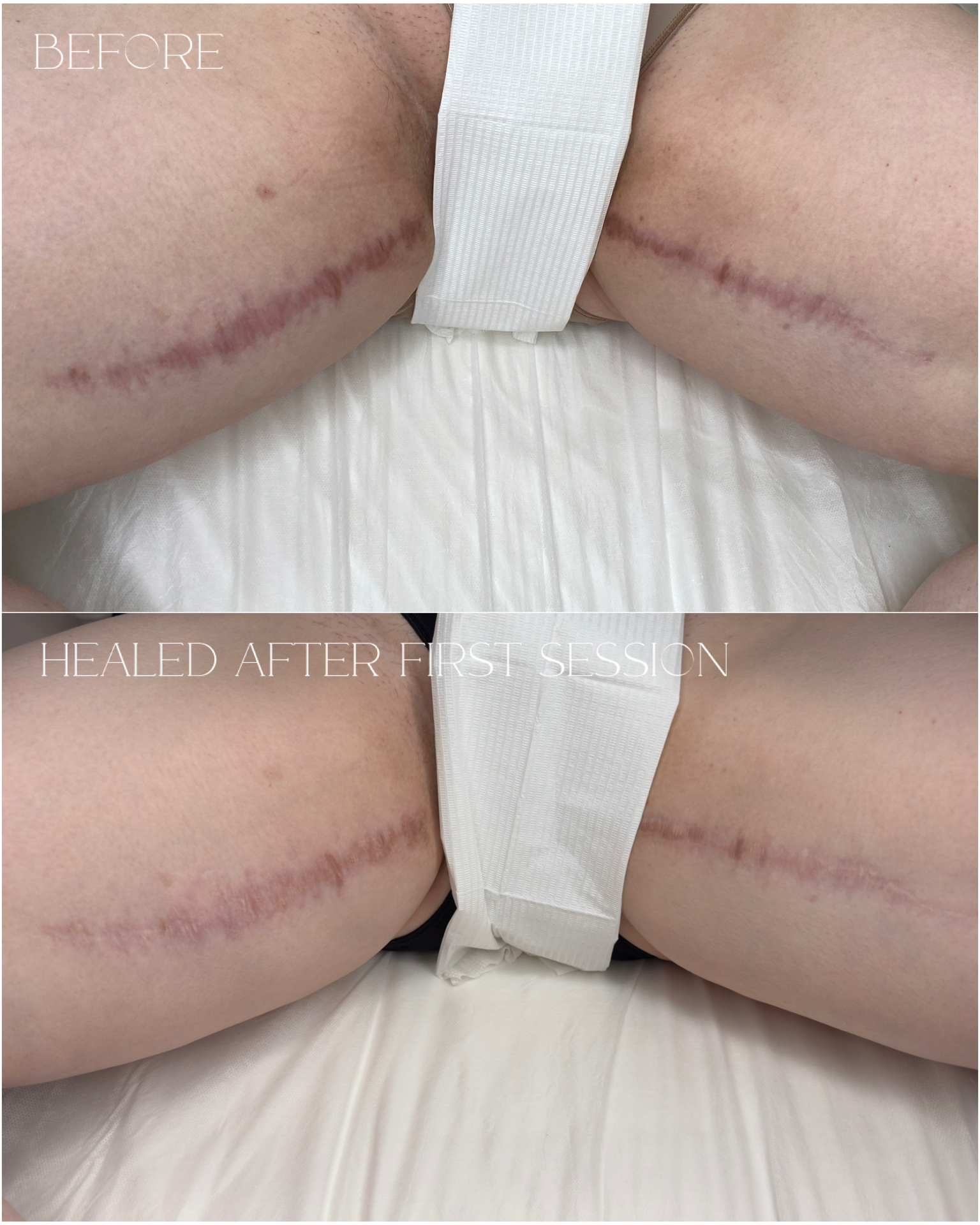
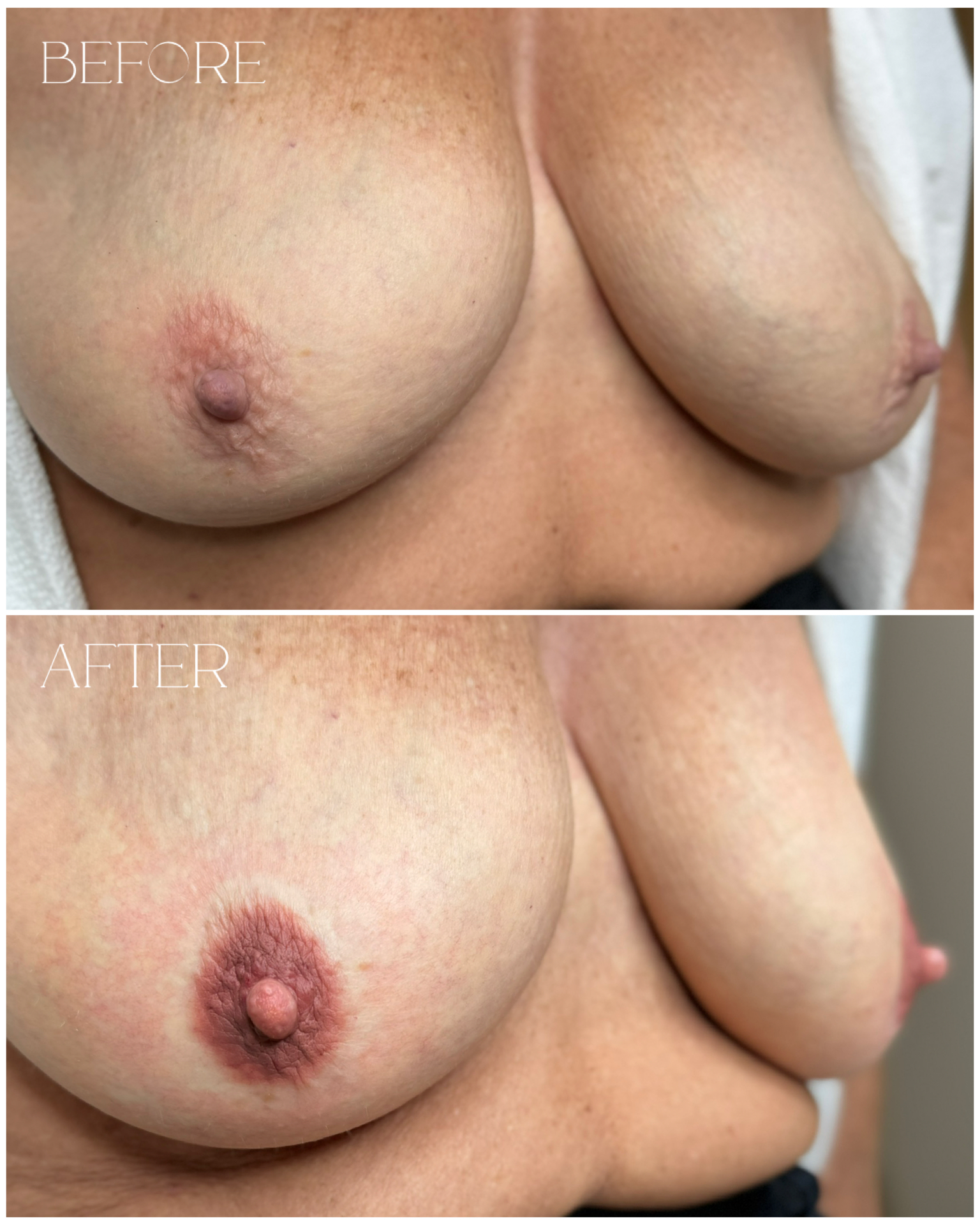
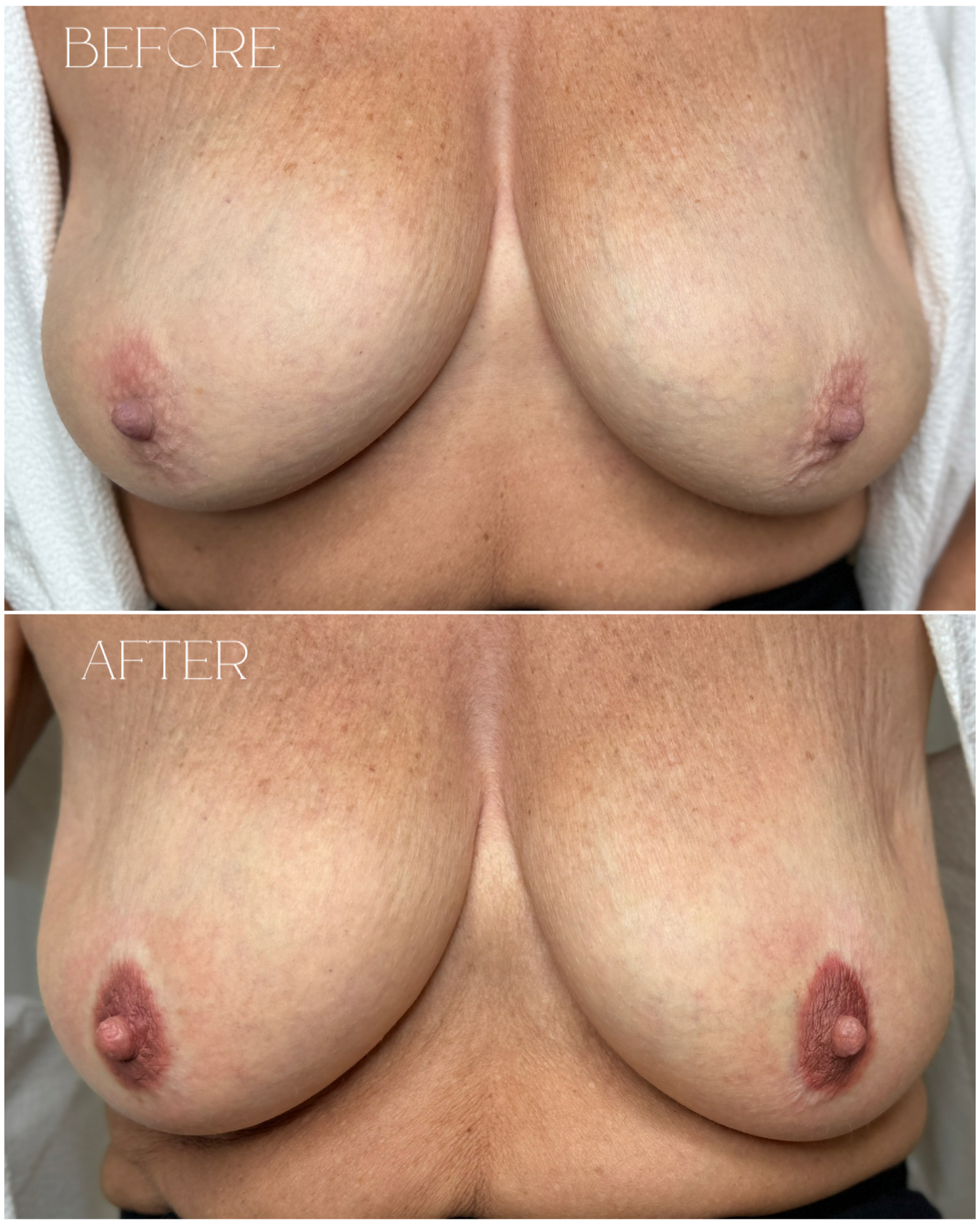
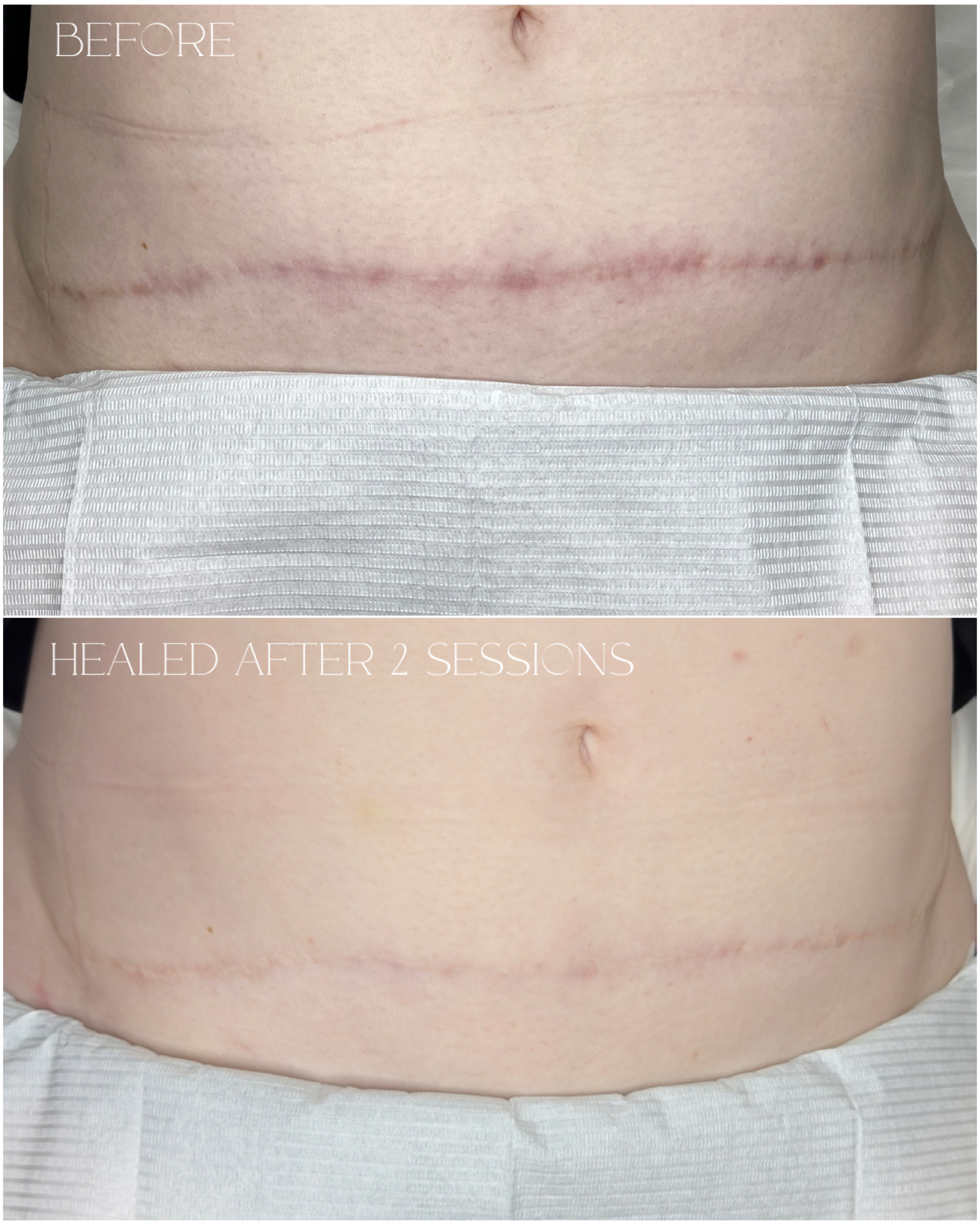
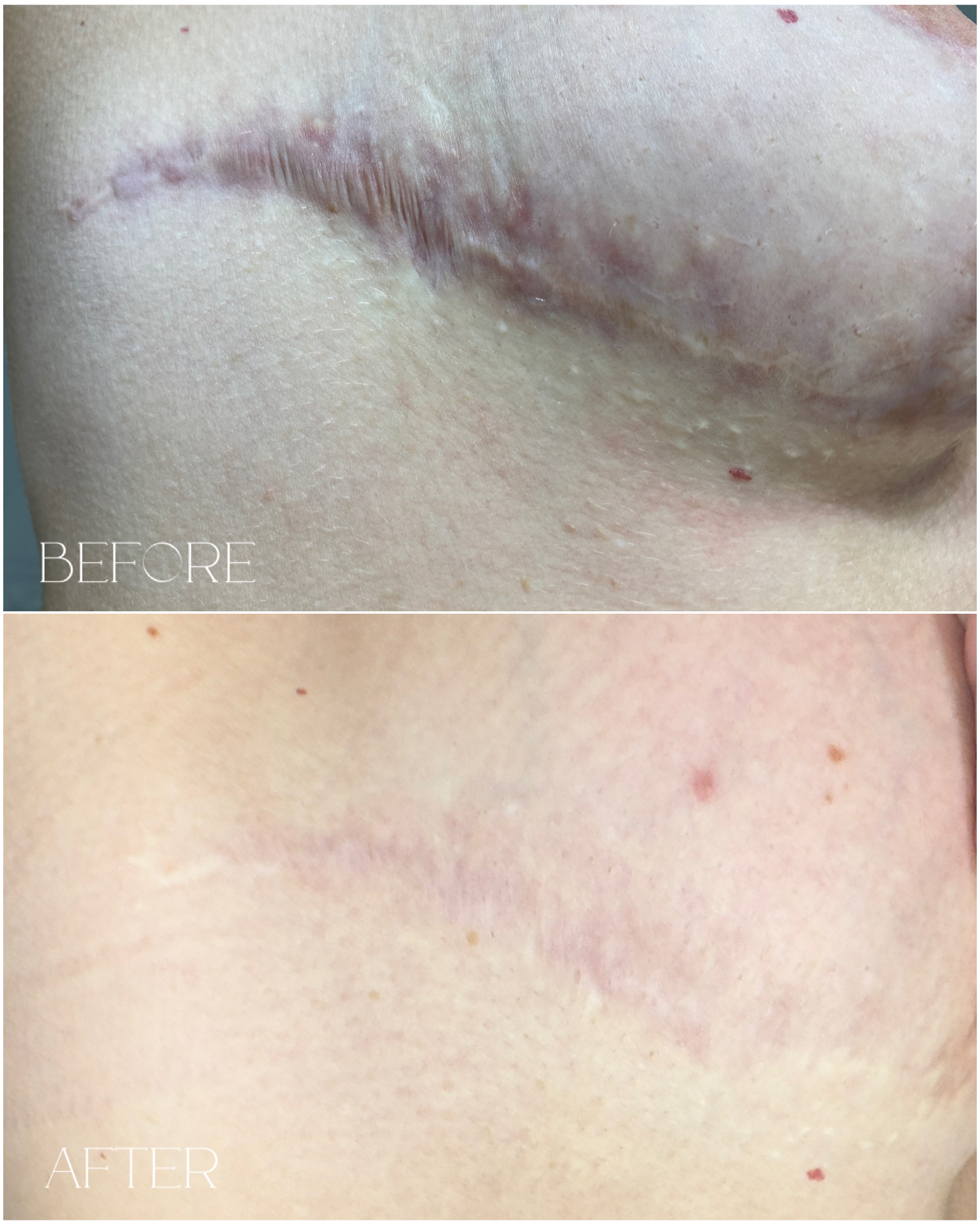
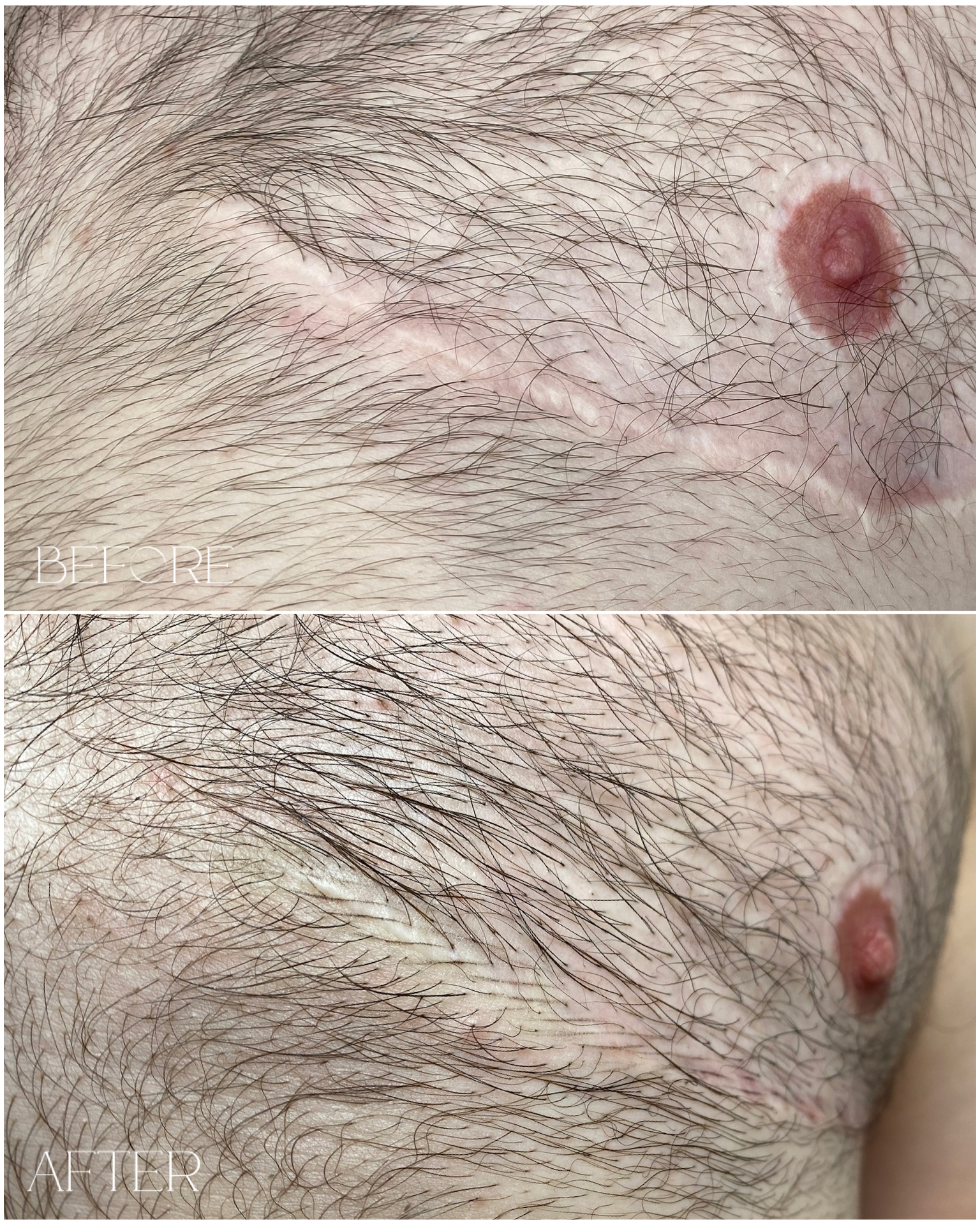
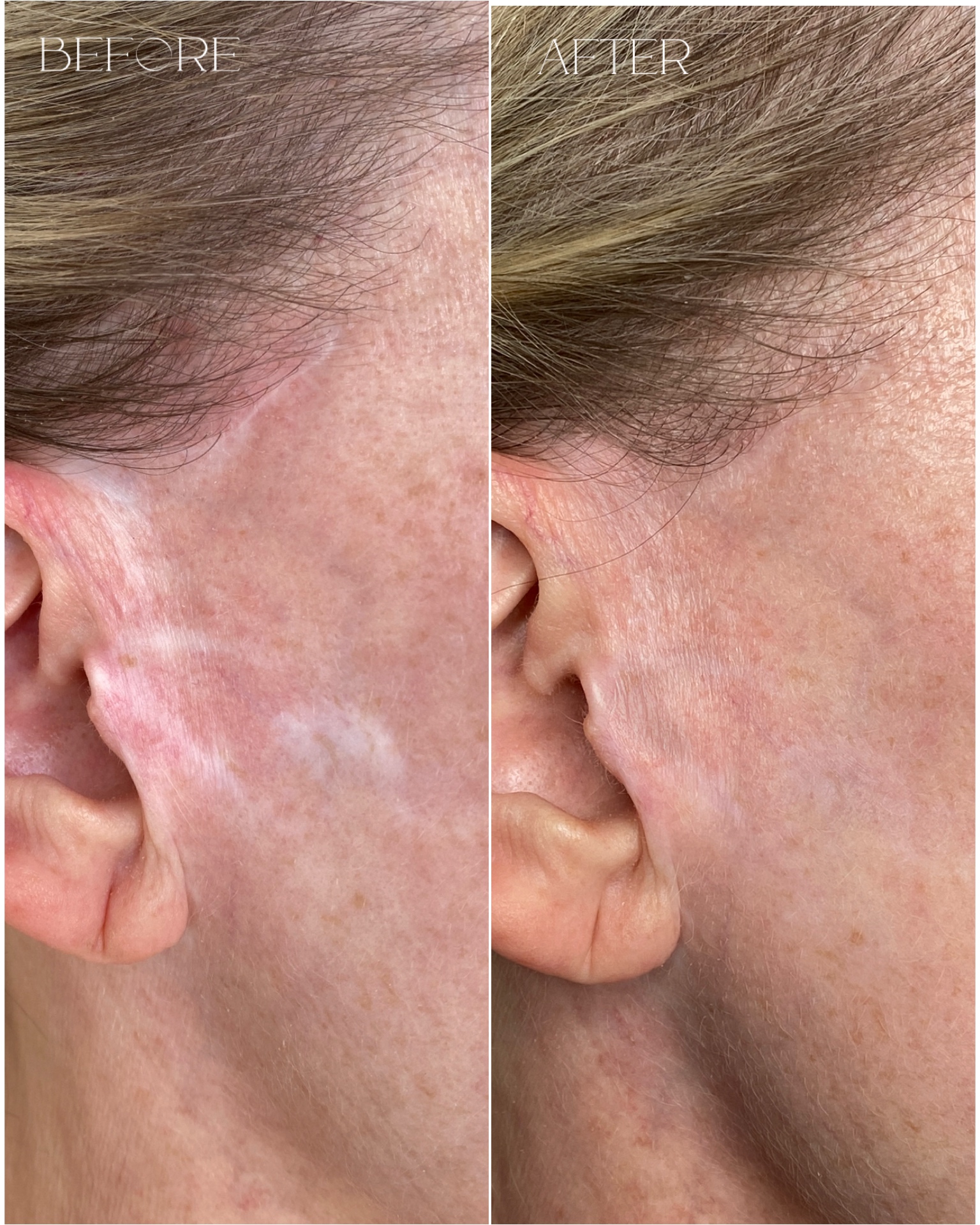
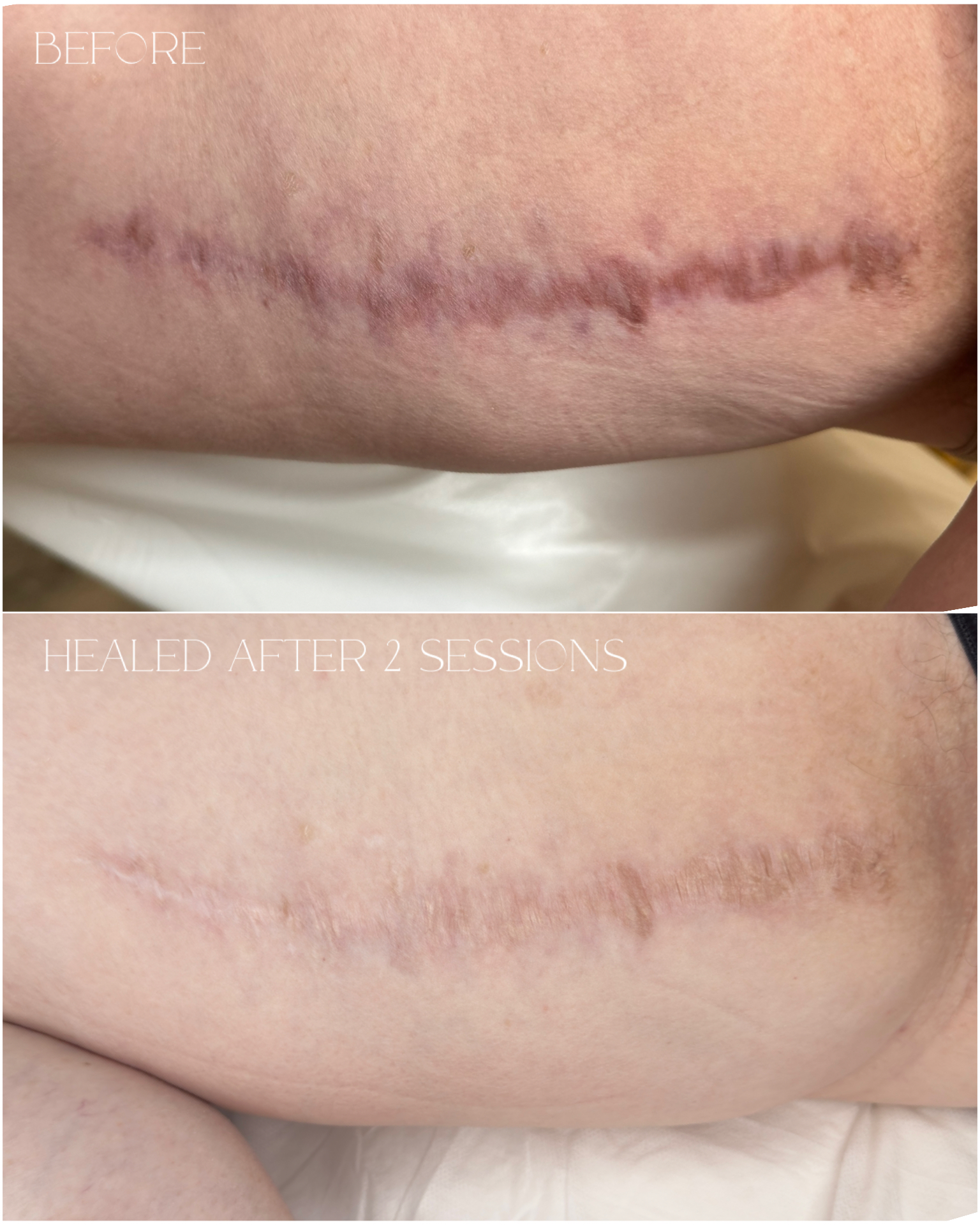
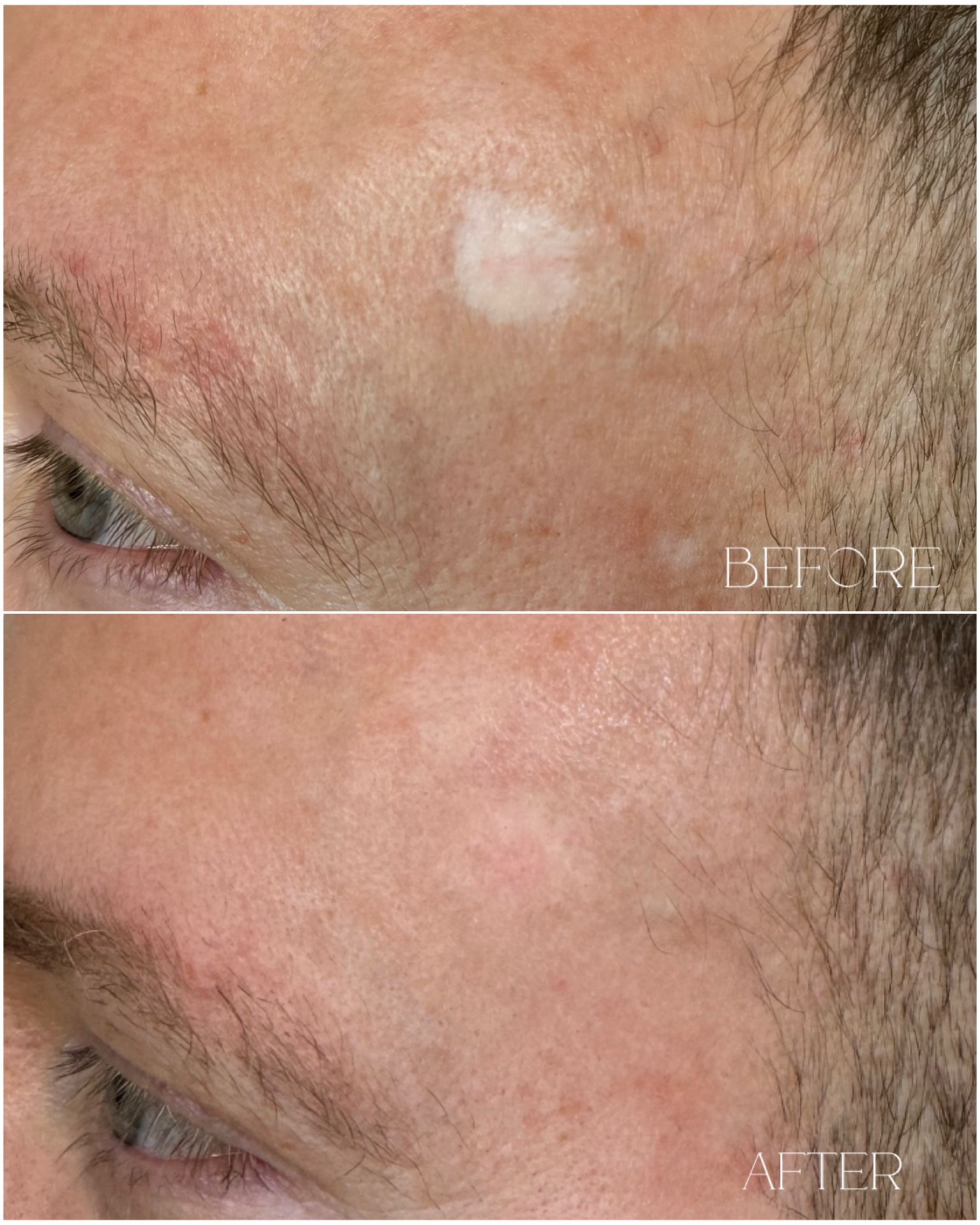
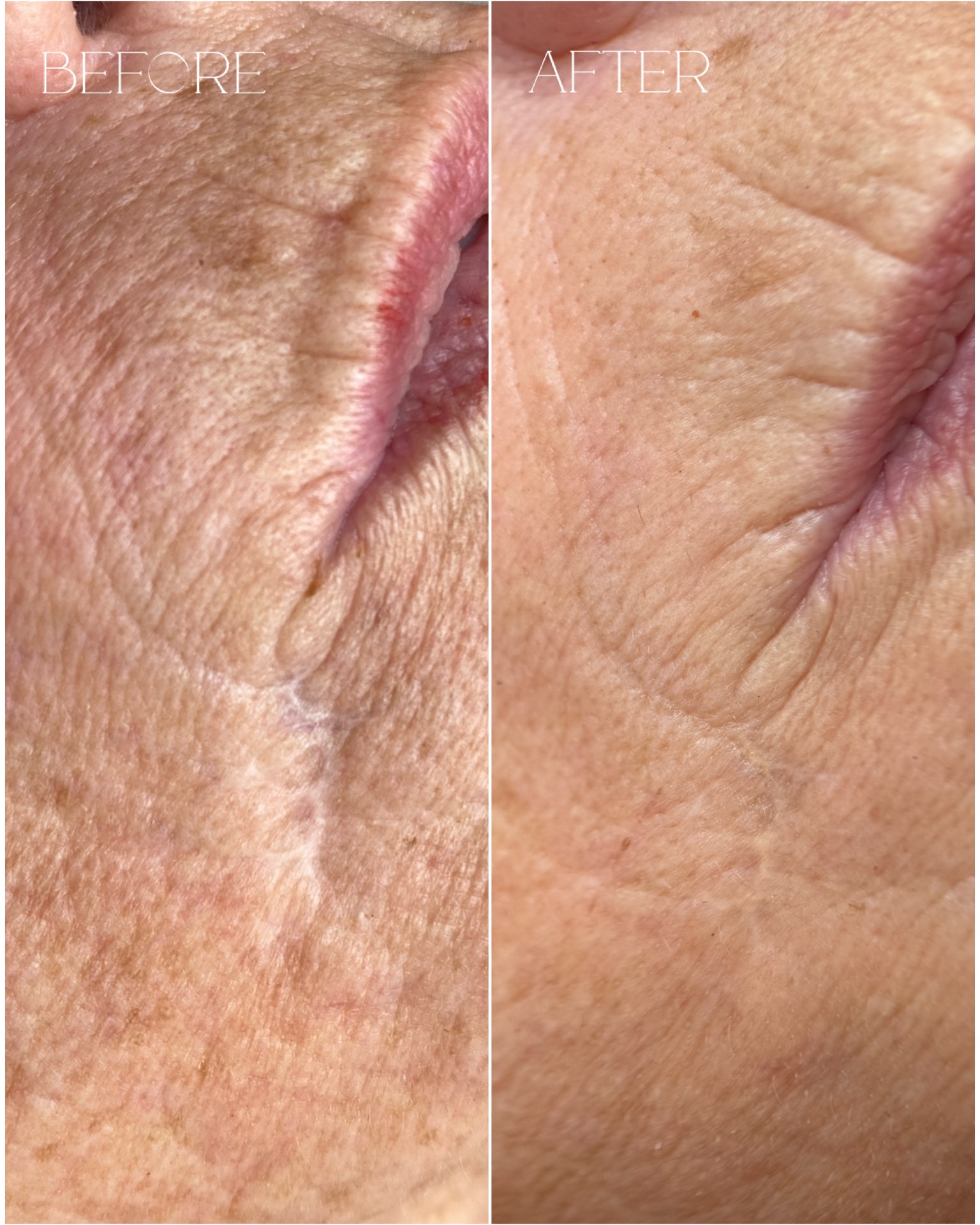
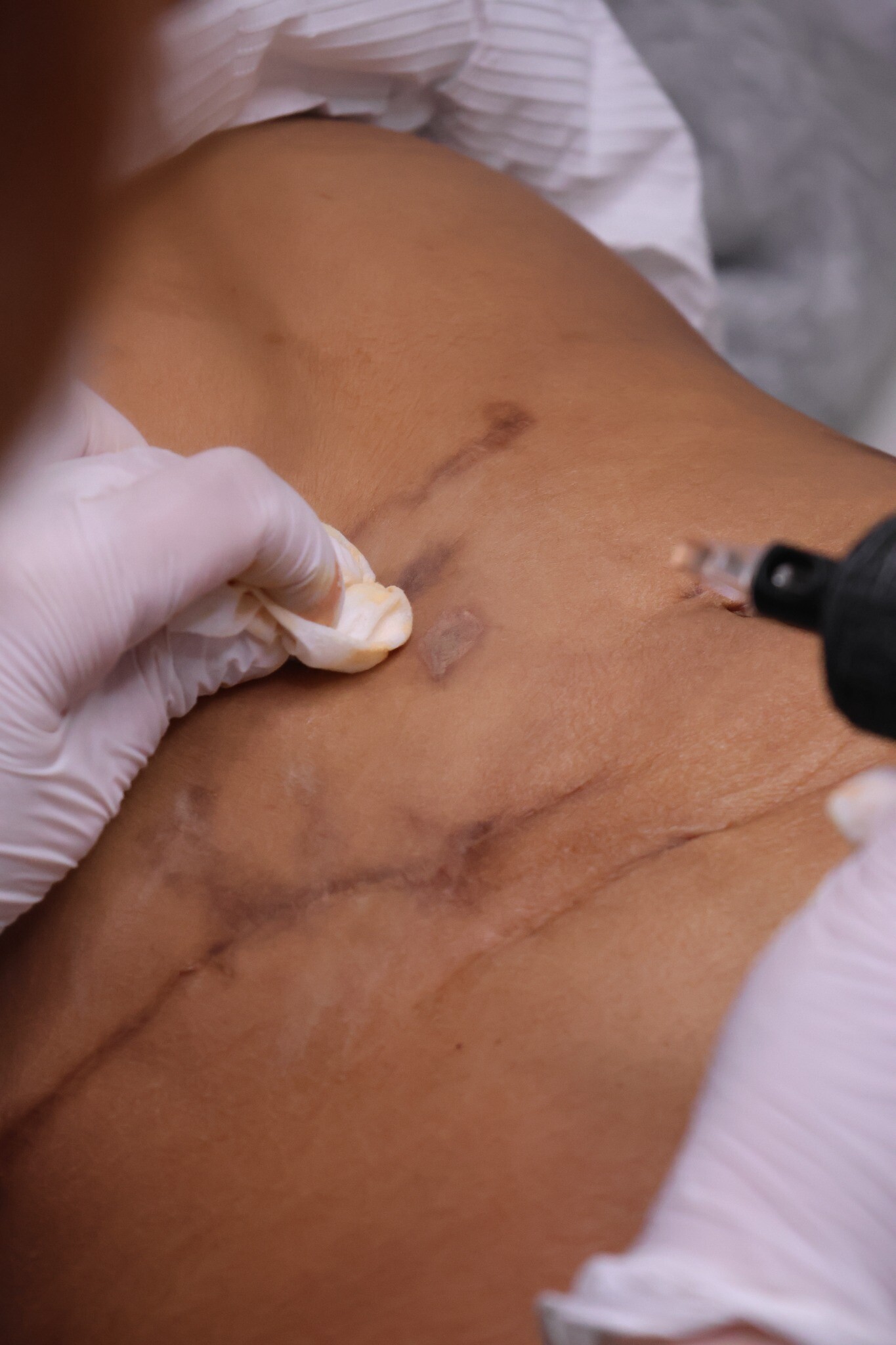
Not really. Scar camouflage does not remove a scar. The goal is to reduce its visibility by helping it blend more naturally with the surrounding skin. Results vary depending on the scar'sage, texture, color, and your individual healing response.
The best candidates have scars that are fully healed, stable in color, and at least 12 months old. During your photo review and consultation, we will determine whether scar camouflage, inklessscar revision, or a combination of treatments is the best option for your scar.
Most scars should be fully healed and at least 12 months old before scar camouflage treatmentcan be considered. Treating immature scars may lead to unpredictable results.
Most scars can be treated, including raised scars, but not all scars are suitable candidates for scar camouflage. Active (not healed yet), red, inflamed, or keloid scars typically require a different approach. Each case is evaluated individually.
Yes. Scar camouflage can often improve the appearance of fully healed stretch marks.
Scar tissue usually does not tan the same way as the surrounding skin, and the pigment implanted during scar camouflage does not tan either. The treatment adds color to a lighter scar so it blends with your natural, untanned skin tone. If your surrounding skin becomes darker from tanning, the treated scar will remain closer to its original color. This may temporarily make it appear lighter or more noticeable until your tan fades. The camouflage can still reduce the contrast compared with an untreated scar, but a perfect year-round match cannot be guaranteed when your skin tone changes. UV exposure can also fade the implanted pigment over time, so always protect the treated area with a broad-spectrum SPF 30 or higher and avoid tanning beds.
Most clients require multiple sessions to achieve optimal results. Depending on the size, texture, location, and complexity of the scar, treatment plans typically involve 3-5 sessions.
The good news is that our project pricing includes all recommended sessions needed to complete your treatment plan.
Because every scar heals differently. Rather than charging you for each appointment, we createa customized project price that includes all recommended sessions needed to achieve the best possible healed result.
Most appointments last between 1-2 hours, depending on the size and complexity of the treatment area.
Most clients describe the treatment as mildly uncomfortable rather than painful. Sensitivity varies based on the location of the scar and individual pain tolerance.
Initial healing typically occurs within 1-2 weeks, while complete healing and pigment stabilization generally takes 8-12 weeks. For clients with darker skin tones, final pigment stabilization may take several months.
Scar camouflage results are long-lasting. However, factors such as sun exposure, aging, skin changes, and lifestyle can gradually affect the appearance of the treated area over time.
Possibly. While many clients enjoy their results for years, we generally recommend amaintenance evaluation every 24-36 months. Touch-ups may be beneficial to maintain optimalcolor matching and blending.
Scar camouflage can be performed on a wide range of skin tones. However, clients with Fitzpatrick Skin Types IV-VI may be more susceptible to temporary hyperpigmentation orhypopigmentation during healing.
If you notice excessive redness, swelling, warmth, drainage, or any signs of infection, contactyour healthcare provider immediately and notify our office.
● Keep the area moisturized
● Protect it from excessive sun exposure
● Apply broad-spectrum SPF when outdoors
● Follow all aftercare instructions